Bedding guide
Pillow Shams vs. Pillowcases: Choosing the Right Bed Finish
A pillowcase is made to be slept on; a sham is usually made to be seen. The distinction sounds simple until a bed needs to look composed at noon and feel comfortable at midnight. Understanding how each cover is constructed, used, and cared for makes it easier to strike that balance—whether you are preparing a guest room, furnishing a hotel, or simply making your own bed with a little more intention.
Two covers, two jobs
In the vocabulary of bedding, pillowcase and pillow sham are sometimes used loosely, as if they describe two names for the same object. They do share a basic purpose: each covers a pillow. But their usual roles differ. Pillowcases are the everyday layer that meets the sleeper’s face and hair. They are designed to be comfortable, easy to remove, and washed often. Shams are more commonly part of the bed’s presentation, lending shape, color, texture, or a finished edge to a carefully made bed.
The difference matters because a cover that looks elegant on a display bed may be less convenient for nightly use, while a plain, practical pillowcase may do little to complete a room’s visual arrangement. Neither form is inherently better. The useful question is what the pillow needs to do: provide a clean and comfortable surface for sleep, help establish the appearance of a room, or manage both roles without creating unnecessary work.
In hotels, where a bed must be inviting and ready for the next guest, the distinction is often especially practical. A sleeping pillow needs a washable cover that can be changed as part of routine linen service. A decorative pillow may be dressed in a sham to create a more tailored impression, then removed or set aside before bedtime. At home, the same arrangement can work, though personal habits may be less formal. Some people like a layered bed; others would rather not remove an extra cover every night.
How a pillowcase is made for use
A conventional pillowcase is generally an open-ended fabric sleeve. The pillow slips inside through an opening at one end, which may be plain, folded, or finished with a flap that tucks over the pillow. The opening is intended to make changing the cover straightforward. Because pillowcases are used directly against the skin, their fabric and laundering routine matter at least as much as their appearance.
Cotton is common for everyday pillowcases because it is familiar, breathable, and suited to frequent washing. Percale, with its crisp, matte hand, tends to feel cool and structured. Sateen is typically smoother, with a softer drape and a more noticeable surface sheen. These are not simply decorative distinctions: the weave changes the way fabric feels and presents itself. Linen, cotton blends, and other fibers may also be chosen according to climate, texture, care preferences, and the rest of the bedding.
Construction details influence convenience. A generous envelope flap can help keep the pillow from peeking out of the opening. A well-finished hem may withstand repeated laundering more gracefully than a loosely finished edge. Size is equally important: a pillowcase that is too small can strain seams and bunch the pillow, while an overly large one may look slack and shift during sleep. For a guest room, matching the case dimensions to the pillows is a small act of preparation that guests are likely to notice chiefly when it has been overlooked.
Because pillowcases are in direct contact with the sleeper, they usually belong in the regular washing rotation. How often they are changed depends on household routine, personal preference, and the laundering guidance for the fabric. In a hospitality setting, they are generally treated as essential guest-contact linens and handled according to the property’s cleaning and hygiene procedures. The practical advantage is that a simple pillowcase can be removed and replaced quickly, without dismantling the rest of the bed.
What makes a sham different?
A sham is often recognized by its more decorative finish and its role in styling. It may have an opening at the back, sometimes arranged as an overlapping envelope, or a closure that is less immediately visible from the front. Borders, flanges, piping, embroidery, quilting, or other details can give it a more substantial outline than a plain pillowcase. The particular construction varies, so the word “sham” does not guarantee one precise closure or one level of ornament.
On a made bed, shams can create a sense of order. They may coordinate with a duvet cover or bedspread, introduce a contrasting color, or provide a neat border around the pillow. A simple white sham can be as restrained as a plain case; the difference may lie largely in its proportions or finish. Conversely, a decorative pillowcase may have embroidery or a distinctive hem while remaining suitable for sleeping. The label is a useful clue, not a complete description of how an item will feel or function.
Many shams are intended to be removed before sleep, particularly when they include raised embellishments, delicate trim, or fabric chosen primarily for appearance. Others are made from comfortable materials and can be used overnight if the care instructions and design permit. A guest-room host should not assume a sham is uncomfortable, nor assume it is meant to be slept on. Checking the fabric, finish, closure, and product guidance is more reliable than relying on the name alone.
Shams can also be more demanding to maintain. A decorative border may require gentler handling; a large flange may need careful folding or pressing; an elaborate surface can make laundering less straightforward. In a room where bedding is changed frequently, every extra finish introduces a small operational consideration. The visual effect may justify that effort, but the choice should be deliberate rather than automatic.
Opening and closure: small details with practical consequences
The opening is one of the easiest ways to compare pillow covers. A pillowcase usually has an open end, sometimes with a tucked inner flap. A sham may close at the back with an envelope construction, ties, buttons, or another finish, depending on its design. The closure can affect how quickly the pillow is inserted, how securely it stays in place, and how the cover looks when the bed is made.
For frequent changes, a simple opening is often the least complicated. In a busy guest room, staff can remove and replace pillowcases quickly and identify whether a pillow has been covered properly. A sham with an overlapping back can keep the pillow concealed and contribute to a clean appearance, but its deeper or more structured construction may take slightly more attention when dressing the pillow. Buttons and ties can add character, though they also add components to inspect and care for.
Closures should be considered alongside the pillow itself. A dense, firm pillow may be harder to fit into a close-fitting sham than into a generously sized case. Conversely, a loose pillow may shift inside an oversized cover. Dimensions listed by a maker refer to the cover, not necessarily to a universal pillow standard, so checking both measurements is sensible—particularly when buying covers to fit existing pillows or furnishing several rooms at once.
In a carefully arranged room, a sham’s hidden closure may help preserve a smooth face and conceal the pillow’s opening. That effect is subtle, but bedding is often a collection of subtle effects: a straight hem, an even pillow line, a sheet folded to the same depth on each side. These details make a bed appear considered without calling attention to the work behind it.
Comfort, fabric, and the feel of a finished bed
When a cover will be slept on, comfort begins with the surface. Fabric should feel agreeable against the face, breathe in a way that suits the sleeper, and tolerate its intended care routine. A crisp percale pillowcase may appeal to someone who likes a cool, freshly made feel. A sateen pillowcase offers a smoother touch and a softer drape. Those preferences are personal; a higher thread count alone does not settle the question.
Thread count describes the number of threads woven into a square inch of fabric, but it does not independently establish quality, comfort, or durability. Fiber quality, yarn construction, weave, finishing, and manufacturing all contribute to the finished cloth. When comparing pillowcases or shams, the material and weave descriptions, actual feel, dimensions, and care instructions are more useful together than a single number considered in isolation.
For a sham used mainly for display, appearance may take a larger share of the decision. It might coordinate with the duvet, repeat a color from the room, or add a modest decorative detail. Yet fabric still matters. A cover that gathers dust easily, wrinkles in a way that frustrates the household, or demands special care may not be an enjoyable addition, however pleasing it looks on the first day.
A balanced arrangement keeps the sleeping surface uncomplicated. One common approach is to use comfortable pillowcases on the pillows intended for sleeping and add shams to pillows positioned behind them during the day. At night, the decorative covers can be removed and placed in a predictable spot. Another approach is to use pillowcases alone, selecting a neat hem or coordinated color for a finished but low-maintenance look. The most elegant arrangement is often the one that suits the people who have to live with it.
A considered choice for guest rooms
A guest room has two audiences: the person who sees the bed made up, and the person who settles into it later. A polished presentation can make a room feel prepared, but guests should not have to guess which pillows are intended for sleep or where decorative covers belong. Clear, uncomplicated bedding is a form of hospitality. It removes a small uncertainty from the first moments in an unfamiliar room.
For pillows guests will use, choose pillowcases that are comfortable, correctly sized, and compatible with regular laundering. A neutral color can coordinate with varied duvet covers and make replacement easier if one case is unavailable. A carefully selected sham can add definition to the bed, but it need not be elaborate. An understated border or a coordinated fabric may supply enough finish without adding a fragile or time-consuming layer.
Consider the room’s cleaning schedule as well. If pillow covers are washed frequently, select fabrics and finishes that can withstand the actual process recommended by the maker. Follow the care label, avoid assuming that every white textile should be bleached, and be cautious with fabric softeners when product guidance advises against them. Residue and unsuitable laundering can affect a fabric’s hand and performance. Proper sorting, suitable wash temperatures, and prompt drying help protect both utility and appearance.
For lodging operators, consistency can matter as much as style. Standardized pillow sizes and cover specifications simplify inventory, reduce mismatches, and make bed presentation more predictable. A decorative sham should be assessed not only for how it looks in a sample room but also for how it behaves after repeated handling. Is the closure convenient? Does the trim remain tidy? Does the item fit the pillows used across the property? These questions turn an aesthetic choice into a workable linen decision.
Care without unnecessary complication
Pillowcases are usually easier to maintain because they are designed for routine use and laundering. That does not mean every pillowcase can be treated identically. Cotton percale, sateen, linen, silk, and blends may have different care requirements. The maker’s instructions should take precedence over general habits, especially when a fabric has special finishing or decorative stitching.
Shams deserve a closer inspection before washing. Check whether the closure should be secured, whether trims require a gentle cycle, and whether the care label recommends line drying or low-temperature tumble drying. Embroidery, piping, appliqué, and delicate edges can be stressed by rough handling or high heat. If a sham is mainly decorative and is not exposed to nightly contact, laundering may not need to follow the same rhythm as the sleeping pillowcase; it should still be kept clean according to the room’s conditions and the item’s care guidance.
It helps to treat bedding as a small system rather than a collection of unrelated pieces. Pillowcases, sheets, duvet covers, and shams may have different laundering needs even when they appear to be part of one set. Washing everything together for convenience can be inappropriate if the fabrics call for different temperatures or handling. Keep care labels available, especially in a guest room where someone else may be responsible for laundry.
Storage is part of care, too. Clean pillowcases and shams should be fully dry before they are folded away. Keeping sets together can make bed changes faster and reduce the familiar search for a matching pair. If decorative covers are removed nightly, a drawer, shelf, or basket assigned to them helps prevent wrinkling and keeps the room orderly.
A hotel-inspired example
The phrase “hotel bed” tends to suggest more than white sheets. It calls up a visual order: a smooth sleeping surface, aligned pillows, and details that appear deliberate but not fussy. The effect can be recreated at home without copying every layer. Begin with the pillows that will actually be used. Give those pillows comfortable, practical cases, then decide whether a sham adds something the room needs.
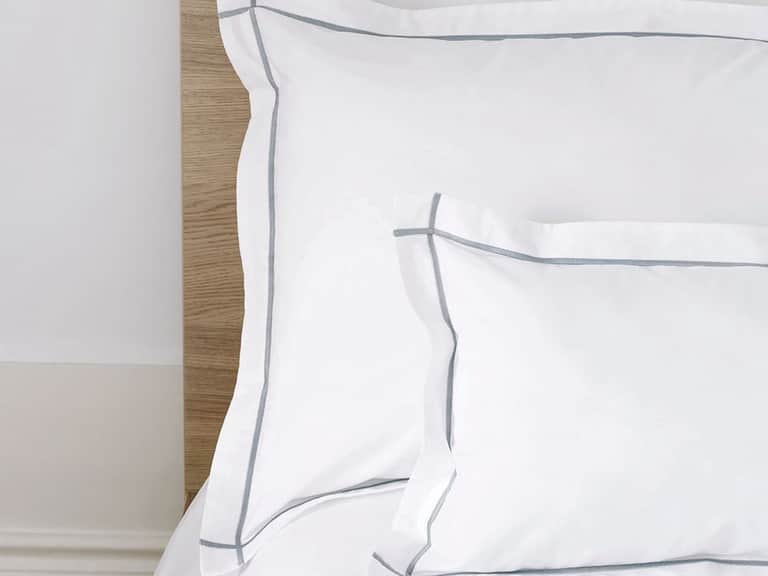
The Bovi Classic Hotel Pillowcases and Shams illustrate how a coordinated group can bridge the distinction. The pieces are described as 100% cotton percale with a 200 thread count and a crisp, breathable feel. A single embroidered line and cross-stitched corners provide a restrained, tailored finish. In an arrangement like this, the visual detail is present but not loud; the useful consideration remains whether a particular piece is intended for nightly use or for styling, and how its care instructions fit the household’s routine.
That is the virtue of coordination: it gives the bed a coherent vocabulary without requiring every layer to perform the same function. A plain sleeping pillowcase can sit in front of a more decorative sham. A pair of shams can frame the bed while practical cases remain ready for sleep. Or a simple set of cases can stand on its own, with the quality of the fabric and neatness of the finish doing all the work.
How to choose: a practical checklist
Before buying pillow shams or pillowcases, pause over a few straightforward questions. They help keep a decision grounded in use rather than in the promise of a perfectly styled bed.
- Will someone sleep on this cover? If so, put comfort, breathability, and easy laundering first.
- What size is the pillow? Check the cover’s dimensions and allow for the pillow’s loft and firmness.
- How often will it be washed? Choose fabric and construction that suit the real laundry routine, not an idealized one.
- Does the closure suit the task? Consider how quickly the cover can be changed and how securely it holds the pillow.
- Is the finish practical? Embroidery, flanges, ties, and buttons can be attractive, but each may affect care and handling.
- Will the pieces coordinate? Matching is not compulsory; a consistent palette or repeated fabric can be enough.
- Can the care instructions be followed? If the required routine is unrealistic, the cover may not be the right choice for that room.
For everyday sleeping pillows, a well-fitting pillowcase is usually the essential purchase. For beds that benefit from a more composed daytime appearance, shams can be added as a separate layer. For a guest room, the pairing often makes sense: practical cases underneath, decorative covers on pillows that are easy to remove. The arrangement stays polished, but its function is legible.
Common misunderstandings
One misconception is that every sham is purely ornamental and cannot be slept on. Some are perfectly comfortable; the relevant facts are fabric, construction, and the maker’s intended use. Another is that every pillowcase is plain. Cases may have embroidery, colored borders, or shaped hems, and decorative work does not automatically turn a case into a sham.
There is also a tendency to equate elaborate finishing with better quality. A well-made plain pillowcase may be more suitable for daily use than an ornate sham, while a carefully constructed sham may be exactly right for a room where presentation is important. Quality is not the number of details; it is whether the material, stitching, fit, and care requirements are appropriate to the purpose.
Finally, a matching set need not mean identical covers on every pillow. A bed can look cohesive through repeated color, fabric, or a shared finish while preserving a practical distinction between sleeping pillows and decorative ones. That modest variation often makes a room feel less like a showroom and more like a place where people are expected to rest.
The right finish is the one that works
Pillowcases and pillow shams occupy a small area of the bed, but they sit close to the point where appearance meets comfort. Pillowcases earn their place through direct use: they should feel good, fit properly, and be simple to change. Shams earn theirs through presentation: they can add a border, a little texture, or a sense of completion to a made bed. When one cover is asked to do both jobs, it should be chosen with both purposes in mind.
For a guest room or hospitality setting, the most successful bed is not necessarily the most layered. It is one whose sleeping surfaces are clear and comfortable, whose decorative elements are easy to manage, and whose fabrics can be cared for as intended. A pillowcase, a sham, or a combination of the two can provide that result. The useful distinction is not a rule about how a bed must look; it is a way to make the choice more knowingly.