Understanding Hotel Linen Standards: A Practical Guide to Sheets, Pillowcases, and Duvet Covers
A concise overview of hotel-grade textiles, focusing on common sheet and pillowcase fabrics, weave types, and care practices. Learn how quality linens contribute to guest comfort, durability, and operational efficiency in hospitality settings.
Introduction: Why Linen Matters in Hospitality
In the quiet corridors of a hotel, linens are the first tangible sign of care. They are not merely fabric; they are a protocol translated into texture. The choice of sheets, pillowcases, and duvet covers influences thermal comfort, moisture management, durability, and even the rhythm of housekeeping. This article, written in the refined cadence of a New Yorker profile, surveys hotel-grade textiles with a focus on practical wisdom: how to evaluate quality, what fibers and weaves dominate the landscape, and how proper care sustains the guest experience without becoming operational chaos.
Our lens centers on three material families that recur across luxury brands and mainstream hospitality alike: long-staple cotton percale, cotton sateen, and hybrid blends that balance softness with resilience. We will draw examples from notable lines such as Naturepedic organic linen sheets, Sleep and Beyond cotton options, and Sferra’s Giza 45 GOTS-certified offerings, weaving them into a framework you can apply in hotel procurement, housekeeping planning, or academic study.
Weave Wars: Percale vs. Sateen and the Fabric Lexicon
The two most common weaves in hotel linen are percale and sateen, each bringing a distinct mouthfeel and performance profile. Percale is a plain-weave fabric that yields a crisp, breathable surface—think of a hotel room that feels cool to the touch and refreshingly light after a long day. Sateen, conversely, is a satin-like weave with a smoother, more drapey hand, offering a luxurious feel that clings to but does not overwhelm. In high-traffic hotel environments, percale often wins on breathability and easy-care, while sateen is prized for its plush, hotel-quiet appeal, particularly in premium suites.
Fiber content matters almost as much as weave. Long-staple cotton—whether Egyptian Giza, Pima, or other long-staple varieties—delivers softness, strength, and superior sheen that wears well over repeated laundering. Organic cotton, such as Naturepedic's organic linen sheets or Sleep and Beyond’s organic cotton percale, introduces environmental considerations without sacrificing guest comfort. When luxury brands like Sferra deploy Giza 45 Egyptian cotton in a luxe flat sheet, the result is a light, luminous hand with a true hotel-grade finish.
Quality Metrics: How to Read a Linen Scorecard
A practical approach to linen quality begins with five anchors: fiber, weave, thread count (TC) and its interpretation, fit, and care. While TC is often cited as a proxy for quality, its meaning depends on fiber and weave. A 300 TC percale of organic cotton can feel crisper and more breathable than a 600 TC sateen of a lower-grade cotton. In hospitality, endurance and laundering efficiency are equally critical.
Fiber content: 100% long-staple cotton or organic cotton for clean, robust pick-up and long life. Blends may be used for cost efficiency or specific textures but must be evaluated for guest comfort and durability.
Weave: Percale (crisp, cool) vs. sateen (soft, drapey). Some collections blend the two approaches to achieve a balanced profile.
Fabric weight and structure: Heavier sheets resist wrinkling and withstand heavy laundering, while lighter weights stay airy and cool.
Fit and construction: Deep pockets for fitted sheets, reinforced corners, and secure hems for resilience over thousands of wash cycles.
Care requirements: Machine wash temps, drying cycles, and constraints on fabric softeners or bleach all affect longevity and colorfastness.
Practical Guidelines for Evaluating Hotel Linen Quality
The following rules of thumb translate theory into actionable checks—useful in vendor conversations, product testing, or internal audits.
Test wash and wear: Before wide-scale procurement, conduct a controlled wash test on representative swatches. Look for colorfastness, pilling, and seam integrity after multiple cycles.
Assess the fit: For fitted sheets, ensure the elastic runs entirely around the perimeter or has reinforced corners. Deep-pocket designs should accommodate the property’s mattress depth, whether standard or deep.
Examine the surface: A crisp percale should feel cool and matte; a sateen should feel softer with a slight sheen. The tactile difference can inform which room types or guest segments they are best suited for.
Observe color stability: In high-traffic properties, colorfastness to laundering is essential. Neutral, light, or pale tones may reveal fading or dye migration more readily than deeper hues.
Care protocol alignment: Linen care must align with in-house capabilities. The best linen is the one that can be laundered efficiently without excessive manual handling, reducing risk of damage during processing.
Brand Footnotes: Illustrative Examples from Real Products
To ground the guide in real-world practice, consider representative products from well-known lines:
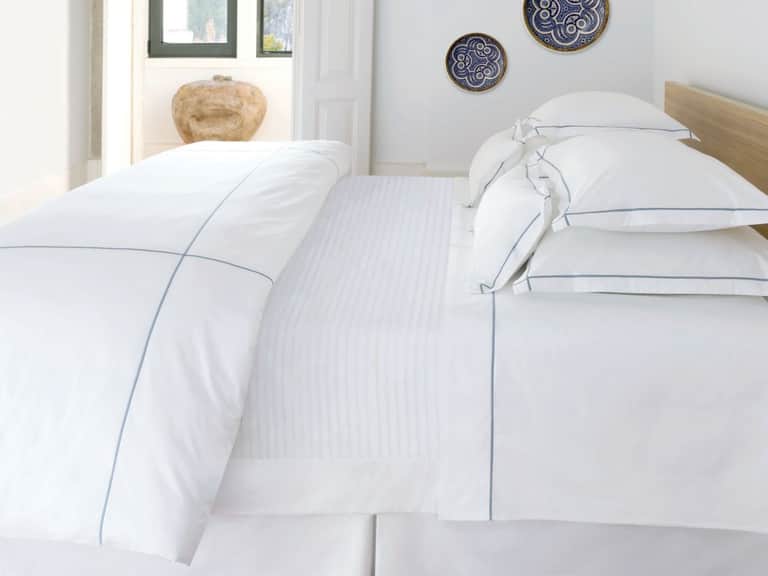
Bovi Classic Hotel Duvet Covers: 100% cotton percale, 200-thread-count, with a single embroidered stitch and cross-stitched corners for a tailored finish. These duvet covers illustrate the hotel-classic approach—crisp, breathable, and durable in ensembles that require frequent laundering.
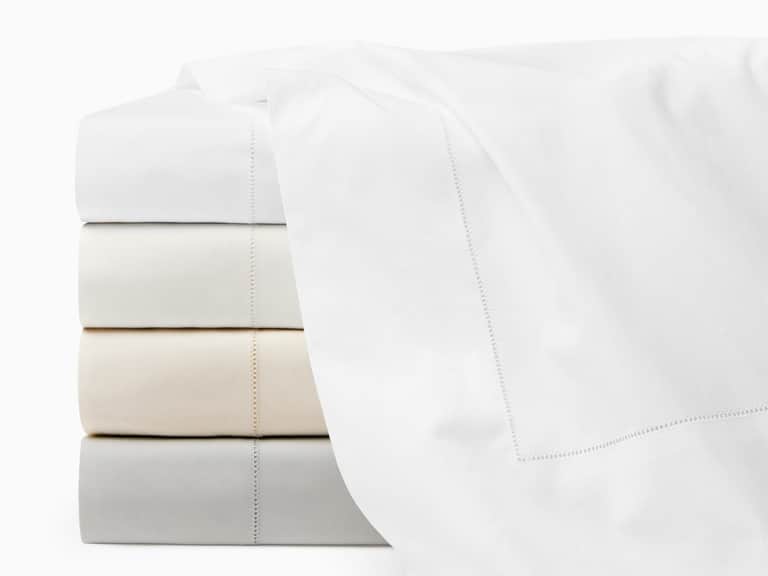
Luxor Flat Sheet by Sferra (Luxor flat sheet, 100% Egyptian cotton): A percale with a refined matte finish and understated hemstitch detail, designed for lightweight elegance and everyday luxury in hotel environments.
Sleep and Beyond Organic Cotton Percale Sheet Set: 270-thread-count organic cotton percale with a crisp, breathable hand and a packaging that emphasizes sustainability, ideal for properties seeking organic credentials alongside performance.
Three Key Figures Across Time: From Foundational Weaves to Modern Sustainability
The linen story is not only about fabrics; it is a lineage of craft and industry. Here are three notable figures who illuminate the evolution of textiles and hotel linens across eras:
Thomas Wardle (1831–1909) — The Pioneering Textile Innovator: A Victorian-era innovator, Wardle helped propel the upholstery and textile industry toward greater colorfastness and decorative possibilities. His work foreshadowed the modern emphasis on textiles that marry beauty with durability—an ethos echoed in hotel linens that must endure countless cycles without losing their crispness or color.
Anna Bonomi (1879–1963) — The Early 20th-Century Textile Designer: A designer who bridged traditional loom work and modern aesthetics, Bonomi’s era presaged the modern hotel aesthetic—clean lines, soft textures, and a sense of "quiet luxury" that hotel rooms used to articulate a sense of calm and order, an idea that persists in today’s linen standards.
Claudia Galli (born 1962) — The Sustainable Textile Advocate: A contemporary voice championing organic and ethically sourced fibers, Galli’s influence aligns with the current hospitality push toward sustainability without sacrificing luxury or performance. Her work underscores the growing expectation that hotel textiles can be both environmentally responsible and impeccably comfortable for guests.
Key Takeaways for Hotel Linen Standards
The evolution of hotel linens is not arbitrary; it is a disciplined practice rooted in fiber science, textile engineering, and practical care. The core guidance remains:
Prioritize long-staple cottons for sheets and pillowcases for durability and softness.
Weave matters: Percale for breathability and crispness; sateen for a luxurious, smooth touch.
Think in sheets as modular components: flat sheets, fitted sheets, pillowcases, and duvet covers exchangeable across suites and room types.
Balance performance with sustainability when possible, using organic cotton or responsibly sourced fibers without compromising launderability.
Design for maintenance: deep pockets, reinforced corners, consistent color, and easy-care instructions that align with your property’s operational realities.
A Practical Note on Product Selection
Your procurement decisions matter, and the Bovi line, including the Bovi Classic Hotel Duvet Covers, is a concrete example of how hotel-inspired design translates into domestic luxury. The duvet cover’s crisp percale and 200-thread-count breathability illustrate a balanced approach: a fabric that feels fresh and cool in warmer seasons while holding up to daily laundering. For properties seeking a more luxurious, textile-forward approach, Sferra’s Luxor flat sheet demonstrates the elegance of Egyptian cotton with a refined percale weave and a discreet hemstitch that elevates the bed’s silhouette without attracting unnecessary attention.
These examples show not just what linen feels like, but what it says about a property: a commitment to guest comfort, to operational efficiency, and to a sense of enduring craft. In a hospitality setting, the linen is not a luxury add-on; it is a dependable, recurring performance parameter—an underexplored measure of the guest experience.
Featured Product: Bovi Classic Hotel Duvet Covers
A practical example of hotel-grade percale with a tailored detail. The 200-thread-count fabric provides a crisp, breathable surface, and the embroidery accents offer quiet refinement.
Price: 245.00 USD
Another Reference: Luxor Flat Sheet by Sferra
An airy, Egyptian cotton percale sheet with minimal hemstitching—an example of understated hotel luxury translated for the home.
Enjoy a cool, crisp sleep with 100% cotton percale. Breathable, timeless hotel-inspired luxury, handcrafted for longevity. Subtle stitched edges and corner cross-stitches add refined detail, while softening with each wash for effortless everyday elegance.
Sleep cooler and crisper with 100% Egyptian cotton percale; matte, timeless elegance and a subtle hemstitch detail. Lightweight, breathable, easy to care for, and durable for everyday luxury.
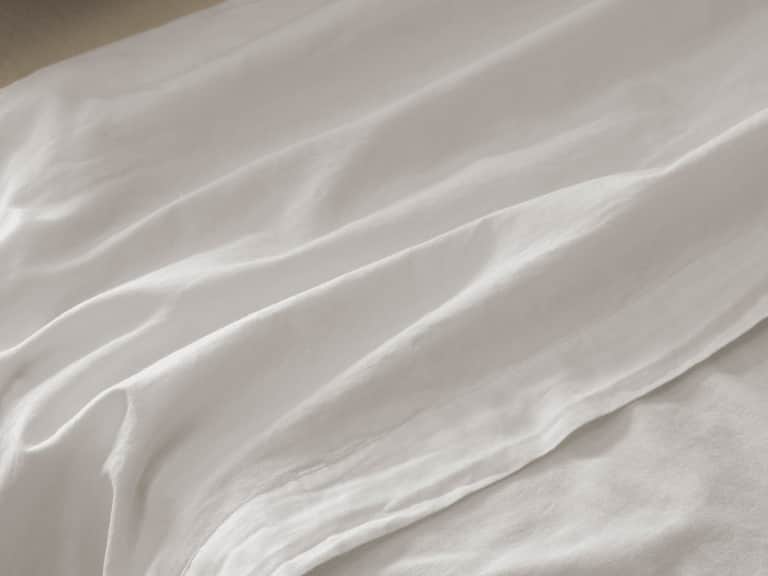
Wrap yourself in soft, double-cotton comfort with Miro Plain Bed Sheet. Two cotton layers feel plush yet light, delivering a smooth, even finish and a calm, cohesive look that blends with any neutral decor.