Bedding guide · Fabric and construction
What Makes Percale Feel Crisp? A Naturepedic Sheet Guide
The crispness of percale is less a matter of marketing arithmetic than of structure. Its plain weave, its cotton fibers, and the way the fabric is finished all contribute to that cool, lightly taut sensation associated with a freshly made hotel bed.
Understanding those elements makes it easier to compare sheets by how they are made and how they are likely to feel—not by one number printed on a label.
A small, orderly crossing of threads
Percale begins with a plain weave: each lengthwise thread passes over one crosswise thread, then under the next, repeating the pattern across the cloth. This one-over-one-under construction is simple in the way a well-made table is simple. Nothing is concealed by a complicated structure; the character of the finished fabric depends on the yarn, the weave, and the choices made during finishing.
Because the threads cross frequently and evenly, percale tends to have a firm, balanced surface. The fabric is not necessarily stiff, and “crisp” need not mean scratchy. Rather, the hand is often described as dry, fresh, and lightly structured: it lies with less flowing drape than sateen and can feel cool when first pulled over the bed. The effect is familiar from carefully laundered hotel linens, where a smooth, taut surface gives the impression of order before anyone has slept in it.
The weave also leaves room for air to move through the fabric. That does not make every percale sheet identical, nor does it promise that a particular sleeper will feel cool all night. Room temperature, mattress and duvet materials, personal warmth, and the weight of the fabric all matter. But percale’s airy, relatively matte construction is one reason it is often considered by people who prefer a lighter-feeling sheet or tend to sleep warm.
There is a useful distinction here between a fabric’s first impression and its long-term feel. New cotton percale can feel notably crisp. With use and laundering, it commonly relaxes and softens while retaining much of its characteristic structure. For some people, that evolution is the point: the sheet becomes less formal without losing its freshness. Others prefer the smoother, more fluid hand of sateen from the beginning.
Percale and sateen: two different moods
Percale and sateen are both ways of weaving fabric, not names for different kinds of cotton. A cotton sheet can be woven as either. The distinction lies in how the threads interlace, and that construction changes the surface, drape, and visual finish.
In percale, the repeated one-over-one-under pattern creates a balanced, matte fabric with a crisp hand. In sateen, the weave allows yarns to pass over more threads before crossing beneath them. That arrangement exposes more of the yarn on the surface, giving sateen its smoother feel and gentle sheen. Sateen usually drapes more fluidly; percale tends to look and feel more tailored.
Neither construction is an automatic measure of quality. A durable, comfortable sheet depends on the whole textile: fiber quality, yarn preparation, weave density, finishing, sewing, and care. A preference for crispness is not evidence of a preference for “better” fabric, any more than a liking for sateen’s smoothness is proof of indulgence. They are different answers to the same practical question: what sort of surface feels good to sleep on?
Even within percale, there is variation. Cotton variety and staple length affect the yarn that can be spun. The yarn’s thickness, the density of the weave, and the finishing process help determine whether a sheet feels especially light, firm, soft, or substantial. Country of origin and a decorative border may be meaningful to a buyer, but neither should substitute for the specifications that describe the actual fabric.
Why thread count is not the whole story
Thread count is often presented as a neat ladder of comfort: more threads, more luxury, better sleep. In practice, it is a limited measure. It generally refers to the number of threads counted in a square inch of fabric, combining lengthwise and crosswise yarns. It can help describe a textile, but it cannot by itself tell you how the sheet will feel, how well it is made, or how it will perform after repeated washing.
Yarn thickness matters. So do fiber length and spinning quality. Two fabrics with the same stated count can feel different because their yarns, weave, and finishes differ. And a high number is not automatically an advantage if it is achieved through construction that produces a fabric heavier or less breathable than the sleeper wants. The more useful question is not “What is the biggest number?” but “Does this combination of fiber and weave suit the way I sleep?”
For percale shoppers, thread count is best considered alongside the plain weave, fiber content, stated weight when available, and the manufacturer’s care instructions. A 300-thread-count organic cotton percale sheet set, for example, offers a useful reference point, but the number alone does not explain its crispness. The percale structure does much of that work; the cotton and finishing influence the finer details.
It is also sensible to read product claims precisely. “Organic cotton” describes the fiber’s sourcing and certification status when supported by the relevant certification; it does not define the weave or guarantee a particular softness. “Long-staple” describes fiber length, which can support stronger, smoother yarns, but it does not replace careful manufacturing. Each detail answers a different question.
Naturepedic organic cotton percale as a reference
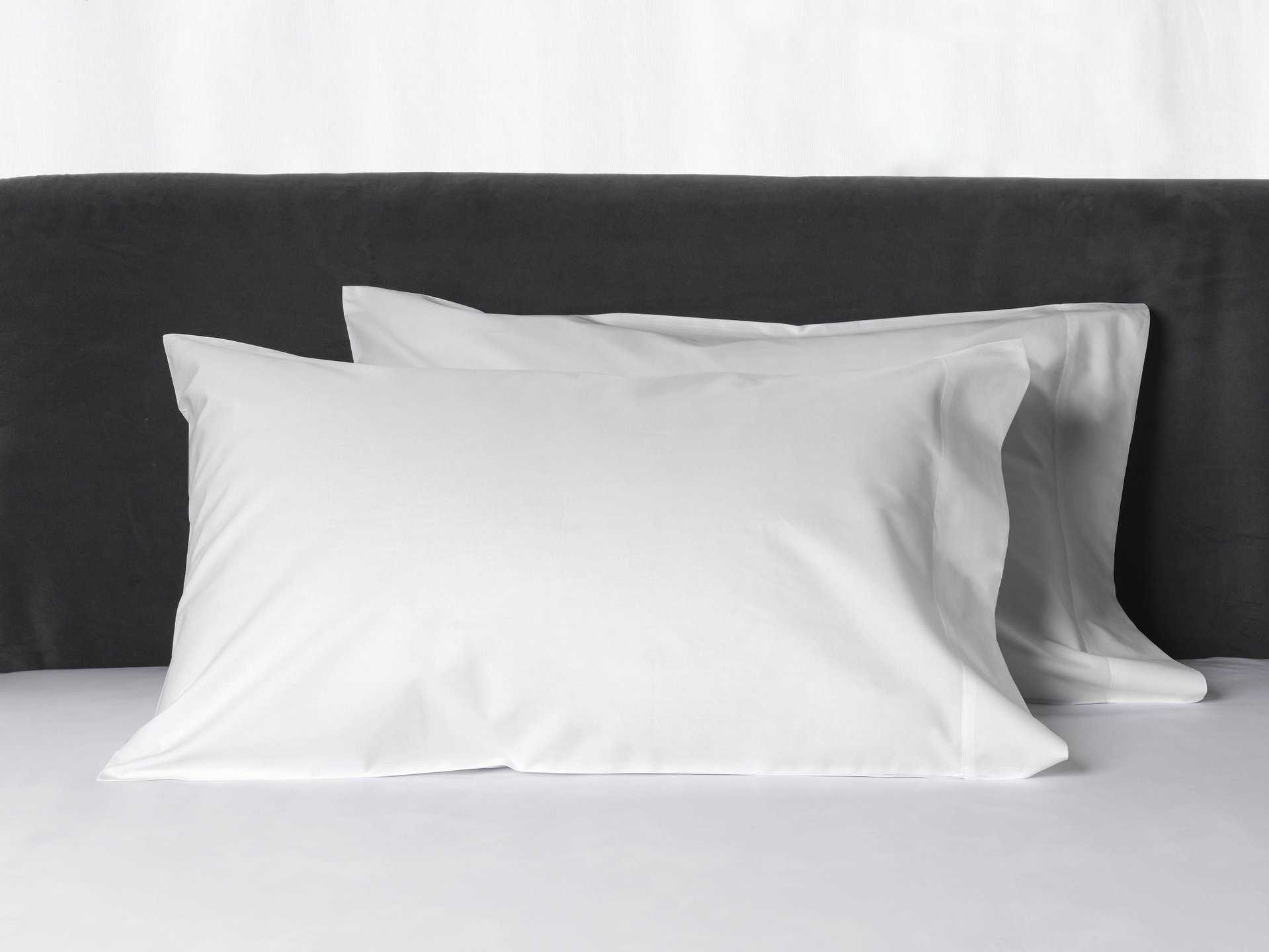
Naturepedic’s organic cotton percale sheet set is one example of how these specifications can be read together. Its product information describes a 300-thread-count, GOTS-certified organic cotton percale fabric, with a balanced one-over-one-under weave. The stated construction is associated with a crisp, breathable feel, and the set includes a flat sheet, fitted sheet, and pillowcases. Available sizes include Twin, Twin XL, Full, Queen, King, and California King.
The fitted sheet is listed with a 15-inch pocket, a detail that matters at least as much as a lofty description of comfort if a mattress is unusually deep. A fitted sheet that pulls loose at the corners can make even beautiful fabric seem like a poor choice. Before selecting any set, measure the mattress from its base to its highest point, including any topper that will remain on the bed. Allow for the fitted sheet’s pocket depth and confirm the dimensions for the exact size you need.
The Naturepedic set is described as pre-washed and intended to soften with washing. Its care guidance calls for machine washing warm, tumble drying on low, and avoiding bleach; a warm iron is optional. Care labels can vary across collections, so follow the instructions for the particular item rather than assuming that all cotton percale should be treated identically. For detailed specifications, see the Naturepedic Organic Cotton Percale Sheet Sets product information.
Certification is another point worth interpreting carefully. GOTS is a textile standard with requirements related to organic fibers and processing, but a certification should be understood from the product’s actual documentation and scope. A label is most useful when a shopper can verify what it covers. It is not a substitute for considering fit, care, feel, or whether the product suits a particular household.
Choosing percale for the way you sleep
Start with sensation rather than prestige. If you like a bed that feels airy, smooth but not slick, and a little crisp when you turn down the covers, percale may be appealing. If you prefer a softer, more flowing surface with a gentle sheen, sateen may be the better fit. Neither preference is universal, and neither can be reliably inferred from a hotel rating or a thread-count claim.
Temperature is a useful consideration, but not a promise. Percale is often chosen by warm sleepers because its structure feels light and breathable. Yet the entire bed contributes to warmth: duvet fill, mattress protectors, room humidity, and the sleeper’s own comfort all play a part. A breathable sheet cannot correct an overly warm room or a heavy insulating layer. It can, however, make the surface feel less dense than a smoother, heavier textile might.
Think about upkeep, too. Cotton percale is generally washable, but repeated laundering is not consequence-free. Detergent residue, high heat, overloading a machine, and leaving damp sheets crumpled for long periods can affect the feel and appearance of bedding. A lower-temperature setting may be appropriate for some fabrics, while others specify warm washing. The item’s care label should settle the question.
Finally, decide how much crispness you want to preserve. Some sleepers enjoy the neat, pressed look of freshly ironed sheets; others are content with the softer finish produced by a low-heat tumble dry. The difference is aesthetic as well as tactile. A smooth, pressed bed looks more formal, while lightly rumpled cotton can feel more relaxed. The fabric does not require a household to imitate a hotel; it only needs to work for the people who use it.
A practical sheet-comparison checklist
When comparing luxury percale bed sheets or organic cotton percale options, set the marketing language aside for a moment and look for a consistent set of facts. A compact checklist can keep the decision grounded:
- Fiber: Confirm whether the sheet is cotton, a blend, or another material, and look for specific information about fiber type and sourcing.
- Weave: Check that the product is explicitly described as percale if you want its characteristically crisp, plain-weave feel.
- Thread count: Treat the count as one specification among several, not as a ranking of comfort or quality.
- Fit: Compare the fitted-sheet pocket depth with the full depth of your mattress and topper.
- Set contents: Confirm whether the package includes a flat sheet, fitted sheet, and the number and size of pillowcases you need.
- Care: Read washing and drying instructions before buying, especially if your usual laundry routine involves high heat.
- Certification: Look for a named standard and product-specific information rather than relying on broad sustainability language.
- Return and trial terms: Check the seller’s policy, since comfort is personal and descriptions cannot reproduce the feel in your own room.
This approach is less glamorous than chasing a record-setting count, but it is more likely to lead to a sheet that fits the bed and survives ordinary use. Bedding is intimate and repetitive: it is washed, dried, folded, and returned to the mattress week after week. A good choice has to perform in that unphotographed routine as well as it looks on the day it arrives.
Care that preserves the feel
New percale may feel crisp right away, but washing can change the hand over time. That change is normal. To keep the fabric comfortable and in good condition, follow the specific care label, use a suitable amount of detergent, and avoid treating every stain or load as an occasion for the hottest cycle. Excessive heat can stress fibers and may encourage shrinkage or wear, depending on the fabric and finishing.
Do not overfill the washer: sheets need room to move and rinse. Remove them from the dryer promptly if you want fewer creases, and use a low setting when the label permits it. Bleach can weaken or discolor some fabrics and finishes, so avoid it where the manufacturer advises against it. These are ordinary measures, not rituals. Their purpose is to protect the balance of softness and structure that made the sheet attractive in the first place.
For a hotel-like finish, a careful fold and a smooth bed surface may matter more than a perfect press. If ironing is part of your routine, use the recommended temperature. If it is not, percale can still look clean and composed when dried appropriately and placed on a mattress of the right dimensions. The promise of the weave is not that life will become immaculate; it is that the fabric can feel fresh without requiring a stage set.
The short answer
Percale feels crisp chiefly because its plain weave interlaces each lengthwise and crosswise thread in a regular one-over-one-under pattern. That structure gives the fabric a balanced, matte surface and a more tailored hand than sateen’s smoother, more fluid weave. Cotton fiber, yarn quality, thread count, finishing, laundering, and fit all influence the final experience, but none makes thread count a complete measure of comfort.
Naturepedic organic cotton percale offers a concrete example: a stated 300-thread-count cotton percale fabric, organic certification information, a 15-inch fitted-sheet pocket, and defined care guidance. Those details are useful precisely because they answer different questions. One describes construction; another speaks to sourcing; another helps establish fit; another anticipates life in the laundry. Read together, they offer a more dependable picture than any single number can.
In the end, choosing percale is a decision about texture as much as specification. If the idea of a cool, breathable, crisp-feeling sheet appeals to you, look at the weave first, then check the cotton, count, fit, and care. A good sheet does not need to make a grand claim. It needs to feel right when the room is quiet and the bed is finally yours.